
welcome to LIXI Compressor!
-

0086-574-87161651
-

sales@lxcompressor.com
welcome to LIXI Compressor!
0086-574-87161651
sales@lxcompressor.com
Location: News > Copeland VR94KSE-TFP-522 Complete Product Guid
Copeland VR94KSE-TFP-522 Complete Product Guid
Mar 27, 2026
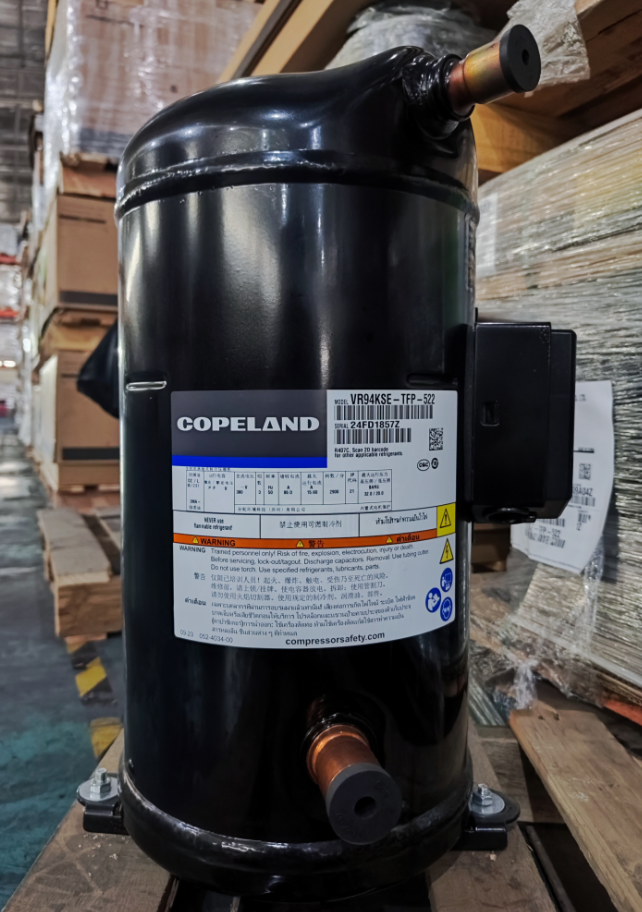
This guide covers the Emerson Copeland VR94KSE-TFP-522 scroll compressor, an 8HP commercial cooling unit compatible with R407C refrigerant. Below you’ll find its full technical specifications, common use cases, professional maintenance best practices, and answers to common user questions to help you select, install, and service this reliable cooling solution.
Product Overview & Technical Specifications
The VR94KSE-TFP-522 is a robust 8-horsepower scroll compressor from Emerson Copeland, the industry pioneer in scroll cooling technology. Designed for high-performance commercial and industrial cooling, this unit delivers reliable, efficient operation with the following core specifications:
1. Cooling Capacity: 67,660 BTU
2. Compatible Refrigerant: R407C
3. Power Supply: 380-420V / 50Hz, 3-phase
4. Design: Compact vertical build with durable black housing, precision-matched scroll sets
5. Key Benefits: Low vibration/noise, fewer moving parts for higher reliability, 30% longer service life vs. traditional piston compressors
The unit's scroll mechanism enables smooth, continuous compression, eliminating the pulsation common in older piston designs. This not only cuts operating noise, but also reduces mechanical stress, leading to fewer breakdowns and lower long-term service costs.
Common Application Scenarios
This Copeland scroll compressor is versatile for a wide range of temperature-controlled environments, including:
1. Commercial Refrigeration: Supermarket display cases, walk-in coolers, cold rooms, and frozen food storage, delivering consistent temperature control to ensure food safety.
2. HVAC Systems: Rooftop AC units, chillers, and heat pumps for offices, hotels, and retail spaces, providing quiet, energy-efficient climate control.
3. Industrial Process Cooling: Food processing lines, pharmaceutical storage facilities, and beverage production, where precise temperature management is critical.
4. Specialized Equipment: Ice machines and medium/low temperature cooling systems, with reliable performance across variable load conditions.
Its compact size and low vibration also make it ideal for space-constrained installations, while its high efficiency cuts long-term electricity costs for large facilities. Many central cooling systems use multiple scroll units for built-in redundancy and flexible capacity adjustment.
Industry Position & Technology Advantages
As the pioneer of scroll compression technology, Emerson Copeland has set global industry benchmarks for decades. Scroll compressors have become the dominant choice in the refrigeration and HVAC industry, replacing traditional reciprocating piston models for several key reasons:
1. Higher Efficiency: Scroll designs deliver superior volumetric efficiency, achieving 15-20% higher EER/COP ratings than piston compressors, helping businesses meet strict global energy efficiency regulations (such as EU ERP and US DOE standards).
2. Lower Maintenance: With only 3 core moving parts (vs. 10+ in piston units), scroll compressors have far less mechanical wear, reducing maintenance needs and extending service intervals.
3. Flexible Operation: The technology supports both fixed-speed and variable-capacity operation, allowing systems to adapt to fluctuating cooling loads while maintaining stable temperatures.
Global demand for scroll compressors is growing steadily, driven by stricter energy rules and the transition to low-GWP refrigerants. With millions of proven installations worldwide, Copeland units are trusted to perform reliably in all climate zones, from extreme cold to high-temperature environments.
Professional Installation & Maintenance Best Practices
To maximize the performance and lifespan of your VR94KSE-TFP-522 compressor, follow these field-proven best practices from our 15+ years of commercial cooling experience:
1. Prevent Liquid Slugging: Always calibrate evaporator superheat to 5-8°F (3-4°C) to avoid liquid refrigerant damage to the scroll wraps, the most common cause of early compressor failure.
2. Oil Management: Use only manufacturer-recommended POE oil. For standard commercial use, change the oil every 10,000 operating hours, or conduct quarterly oil analysis to check for contamination and adjust your maintenance schedule accordingly.
3. Temperature Monitoring: Keep discharge temperatures below 230°F (110°C), especially in high-ambient environments, to prevent overheating and motor degradation.
4. Contaminant Protection: Install a 30-micron suction line filter and a liquid line drier to block debris and moisture, which can cause internal corrosion and blockages.
5. Oil Return for Multi-Compressor Systems: For systems with multiple scroll units, use equalized piping design to ensure consistent oil return to all compressors, preventing oil logging that can starve units of lubrication.
6. Electrical & System Checks: Inspect electrical connections, contactors, and motor protection modules quarterly. Clean condenser coils every 6 months to maintain optimal heat transfer and system COP.
7. Heat Pump Specifics: For heat pump applications, test defrost cycles and reversing valve operation twice a year to ensure efficient winter operation.
8. Efficiency Upgrades: Adding a variable frequency drive (VFD) can improve part-load efficiency by up to 30%, cutting energy costs for systems with variable cooling needs.
Frequently Asked Questions
Q: What makes Copeland scroll compressors more reliable than piston types?
A: Scroll compressors have significantly fewer moving parts usually only three main components compared to multiple valves pistons and rods in reciprocating designs. This simplicity reduces mechanical wear vibration and the risk of failure leading to longer service intervals and higher uptime.
Q: Can Copeland compressors work with modern low-GWP refrigerants?
A: Yes many models including the VR series are compatible with R407C and other low-GWP blends. Always check the specific model rating plate and follow official retrofit guidelines for oil type and system adjustments.
Q: How quiet are these compressors in operation?
A: Scroll technology produces very low vibration and noise levels making them ideal for noise-sensitive environments like retail stores hotels and residential buildings. Proper mounting with isolation pads further reduces transmitted sound.
Q: What maintenance is typically required?
A: Routine tasks include checking oil levels and quality replacing filters and driers monitoring superheat and subcooling cleaning coils and inspecting electrical components. Following the manufacturer schedule helps prevent most common issues.
Q: Where can I find more information or compatible alternatives?
A: Detailed performance data application guides and support are available from official sources. For additional semi-hermetic piston and screw options that provide excellent serviceability explore www.lxcompressor.com.
Copeland scroll compressors continue to deliver outstanding efficiency reliability and quiet operation across countless installations worldwide. Their advanced design meets the demands of modern commercial and industrial cooling while supporting energy saving and environmental goals. Whether for new projects or system upgrades these units provide a proven solution backed by decades of engineering excellence.
Where to buy
Where to buy

© 2022 LIXI COMPRESSOR All rights reserved.

© 2022-2024 LIXI Compressor All rights reserved.



